Have you ever wondered why Caribbean flags feel so full of life? Every flag tells a story, capturing memories of old island peoples, the changes brought by colonial times, and the fierce pride in reclaiming their identity.
These colorful flags are more than just pieces of cloth. They mark chapters of history and celebrate pride in each community’s heritage. Here, we take a look at how these symbols grew from simple marks on the islands into bold signs of national spirit.
Each splash of color and every unique design gives us a peek into the lively soul of the Caribbean. So, let’s dive in and see how every hue echoes the region’s vibrant spirit.
Caribbean island flags: Radiant Symbols and History
Caribbean island flags are like colorful storybooks, each one sharing a unique past that stretches way back in time. Early settlers arrived around 8000 BCE and left their mark on the land. Then, when Europeans came in 1492, everything shifted. Centuries of colonization and the use of African labor reshaped the region, and after slavery ended in the 1800s, the islands began taking back control of their own identities. Fast-forward to the 20th century, and the push for independence led to the creation of flags that mix history, struggle, and cultural pride.
Today, these flags burst with national spirit and energy. Take the flag of Trinidad & Tobago, for example. Adopted in 1962, it shows a bold red background with a striking white-edged black diagonal band. In this design, black represents the rich earth and the hardworking people, white stands for water, purity, and equality, and red captures the land’s energy and the warmth of the sun and its community. Locals even affectionately call it the Sun-Sea-Sand Banner, a nod to its vibrant, sunlit charm.
Key national banners from the Caribbean include:
- Antigua & Barbuda
- Bahamas
- Barbados
- Cuba
- Dominica
- Dominican Republic
- Grenada
- Haiti
- Jamaica
- Saint Kitts & Nevis
- Saint Lucia
- Saint Vincent & the Grenadines
If you’re curious to see these lively tropical flags and find each island on the map, check out the Caribbean islands map guide (https://caribiana.com?p=2762).
Historical Evolution of Caribbean Island Flags
Before the islands earned their independence, they flew British ensigns that spoke of a time when foreign powers ruled the land. Over time, these familiar imperial banners lost their charm as locals began to yearn for flags that told their own story. When the promise of self-governance became a reality, islanders chose symbols that reflected their pride and the warm spirit of Caribbean life. In the swinging 60s and vibrant 70s, as nations stepped into independence, fresh flag designs burst onto the scene with colors and shapes full of life and hope.
Today’s flags are like visual stories, blending bold colors and distinctive symbols that capture a rich cultural heritage and a deep love for the land and sea. Each design feels almost like a sun-drenched memory, moving away from the old colonial look and embracing a future filled with local passion and dreams.
| Island | Independence Year | Flag Adoption Year |
|---|---|---|
| Jamaica | 1962 | 1962 |
| Trinidad & Tobago | 1962 | 1962 |
| Barbados | 1966 | 1966 |
| Bahamas | 1973 | 1973 |
| Grenada | 1974 | 1974 |
| Saint Lucia | 1979 | 1979 |
Caribbean island flags: Radiant Symbols and History
Caribbean flags do more than just flutter in the wind, they tell stories through vivid colors and simple shapes. Take Jamaica's flag, for example. The black shows the strength needed to overcome tough times, the green points to hope and the land's rich bounty, and the yellow reminds us of the sun’s warm embrace. Ever catch yourself staring at a flag and thinking each color is like a quiet nod to local pride and resilience?
These flags also play with shapes that add extra layers of meaning. Imagine bold diagonals or bright, central stars that bring to mind bustling boat clubs and friendly fishing villages. Think of a flag with a clear, bold line that makes you feel like you’re at a lively seaside market, a place where design and history mix in the most natural way.
Detailed Flag Profiles of Major Caribbean Islands
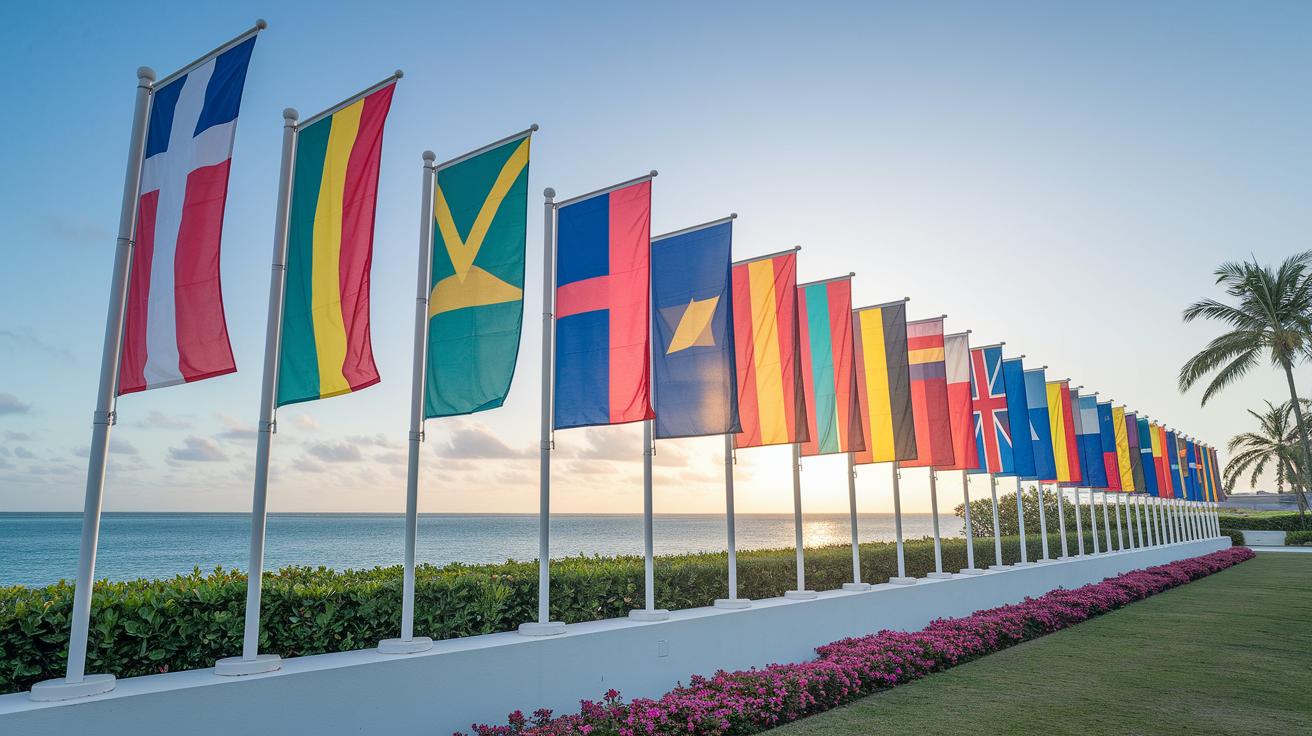
Caribbean island flags tell vibrant tales that capture each nation's deep pride and colorful history. Take Antigua & Barbuda's flag from 1981, it shines like a sunrise with a glowing V-shape. Black honors African roots, blue mirrors the endless Caribbean Sea, and red bursts with energy. Picture it as the first light peeking over the horizon, warmly inviting you to a day full of promise.
Then there's the Bahamas flag from 1973. It flaunts aquamarine that reminds you of clear ocean waters, gold that sparkles like the bright midday sun, and a bold black stripe representing its resilient people. Barbados' flag, around since 1966, offers sleek ultramarine stripes with a striking gold center and a black trident that tells a story of breaking free from the past, a symbol of forging a path toward liberty.
Cuba’s flag, introduced in 1902, dances with five alternating blue and white stripes, a vivid red triangle, and a lone white star. Here, red shouts strength, white stands for purity, and blue suggests the organization of its regions. Dominica’s 1978 design paints a green field intersected by a cross in yellow, black, and white, and the soaring Sisserou parrot adds a touch of local pride and wild beauty.
The Dominican Republic’s flag, dating back to 1844, features a white cross that divides deep blue and rich red quarters, topped off with the national coat of arms. Grenada's flag from 1974 brings a bold red border, six stars that nod to its parishes, and a bright yellow star carrying a nutmeg emblem, a tribute to its famous spice industry. Lastly, Haiti’s 1986 flag shows blue and red horizontal bands crowned by a central coat of arms on a clean white background.
| Island | Adoption Year | Key Colors & Symbols | Nickname |
|---|---|---|---|
| Antigua & Barbuda | 1981 | Rising sun, black (African roots), blue (Caribbean Sea), red (energy) | N/A |
| The Bahamas | 1973 | Aquamarine (ocean), gold (sun), black (resilience) | N/A |
| Barbados | 1966 | Ultramarine stripes, gold center, black trident | N/A |
| Cuba | 1902 | Blue & white stripes, red triangle, white star | N/A |
| Dominica | 1978 | Yellow, black, white cross on green, Sisserou parrot | N/A |
| Dominican Republic | 1844 | White cross dividing blue & red quarters, coat of arms | N/A |
| Grenada | 1974 | Red border, six stars, yellow star, nutmeg emblem | N/A |
| Haiti | 1986 | Blue & red horizontal bands, coat of arms on white | N/A |
Contemporary Variations and Regional Insights on Caribbean Island Flags
Yesterday’s designs are getting a new vibe at Caribbean festivities. Familiar emblem details are now reimagined for anniversary logos and tourism branding, mixing the old with a modern twist. Imagine being on a cruise ship and seeing a stretched national flag proudly waving on deck, it's tradition with a fresh spin.
Maritime flags aren’t just for official events anymore. You’ll find them at boat clubs and cruising vessels, keeping the spirit of national design alive with a sleek, updated look that locals and visitors love. And have you ever seen Afro-Caribbean textile patterns inspire new flag ideas? At cultural festivals, colorful fabrics match the shapes and hues of a flag, sparking friendly chats about history and creativity.
Digital art is joining the party too. On social media, Independence celebrations now burst with bright, modern takes on classic banners. These digital works blend pixels and passion, vividly telling the ever-changing story of Caribbean heritage.
Resources for Further Exploration of Caribbean Island Flags
If you’re eager to learn more about these colorful symbols, a treasure trove of resources is waiting for you. Online museum collections have beautiful archives that show how Caribbean flags have evolved over the years. Some academic articles dive into how different colors and shapes tell our shared cultural stories. You can also download guides with high-quality flag images in PDF format, perfect for anyone who loves collecting visual keepsakes.
Imagine scrolling through a digital archive and uncovering secrets behind every color and shape; it’s like reading a diary of Caribbean strength.
Then, check out buzzworthy vexillology forums and fun quiz platforms where fans swap ideas and chat about the flags’ fascinating past. These resources bring the hidden stories of each flag to life, inviting you to explore history through every bright line and hue.
Final Words
In the action, we examined the historical evolution, symbolism, and detailed profiles of the Caribbean island flags. Each section brought to light how these banners capture rich histories and deep cultural pride. We took a close look at color meanings, national symbols, and modern reinventions that paint a clear picture of the region’s identity. This friendly wrap-up leaves you with a warm view of Caribbean heritage, inspiring a memorable and meaningful island exploration.
FAQ
Q: What do Caribbean island flags with names and images show?
A: The Caribbean island flags with names feature national banners from countries like Jamaica, Trinidad & Tobago, and Barbados. High-quality images and descriptions are available in online resources for easy reference.
Q: What are old Caribbean island flags?
A: Old Caribbean island flags refer to early designs used during colonial times. They give historical context as these banners evolved into the modern national symbols seen today.
Q: What does Caribbean island flags meaning refer to?
A: Caribbean island flags meaning is explained by color choices and symbols that represent local culture, history, and natural beauty, such as Jamaica’s use of black, green, and yellow for resilience, hope, and sunlit wealth.
Q: What are African and Caribbean flags?
A: African and Caribbean flags share design influences that celebrate a rich cultural heritage. They often incorporate similar colors and symbols honoring the region’s historical ties.
Q: What do West Indian Flags represent?
A: West Indian Flags represent the national identities of Caribbean nations. They reflect local pride, history, and the distinctive cultural traits of islands in the West Indies.
Q: What are Caribbean countries flags and capitals?
A: Caribbean countries flags and capitals include national banners paired with cities like Havana, Kingston, and Bridgetown. These symbols mark the identity of each nation in this vibrant region.
Q: What are the 13 Caribbean flags commonly noted?
A: The 13 Caribbean flags typically refer to the major national banners from Antigua & Barbuda, Bahamas, Barbados, Cuba, Dominica, Dominican Republic, Grenada, Haiti, Jamaica, Saint Kitts & Nevis, Saint Lucia, Saint Vincent & the Grenadines, and Trinidad & Tobago.
Q: What are the 26 Caribbean islands?
A: The 26 Caribbean islands list includes all the prominent islands across the region. This count typically covers politically defined territories and is detailed in regional guides for accurate understanding.
Q: How many flags are there for the Caribbean islands?
A: The number of flags for the Caribbean islands exceeds a dozen, with each independent nation and associated territory sporting its own distinctive banner that represents its unique culture and history.
Q: What are the 12 countries in the Caribbean?
A: The 12 countries in the Caribbean are generally recognized as Antigua & Barbuda, Bahamas, Barbados, Cuba, Dominica, Dominican Republic, Grenada, Haiti, Jamaica, Saint Kitts & Nevis, Saint Lucia, and Saint Vincent & the Grenadines.
